
Content provided by Biosecurity New Zealand
The delicate balance of New Zealand’s freshwater ecosystems is under threat from invasive weeds, which could have ramifications for our farming, forestry and horticulture industries.
New Zealand’s freshwater ecosystems are home to many unique and rare native species, all of which have evolved to help provide balance to these delicate systems. Each species has a part to play, providing food, homes and nutrients for the wider environment. These ecosystems enable our farming, forestry and horticulture systems to thrive.
This delicate balance, however, is increasingly under threat. Invasive species, particularly fast-spreading freshwater weeds, can rapidly overwhelm native habitats, displacing native species and causing cultural, social, environmental, and economic impacts.
Water hyacinth (Pontederia crassipes) and salvinia (Salvinia x molesta) are two of the world’s most damaging aquatic weeds. Both these plants are classified as ‘Unwanted Organisms’ and ‘Notifiable Organisms’ under the Biosecurity Act. This means they cannot legally be grown, sold or shared within the country, and any sightings must be reported to Biosecurity New Zealand.
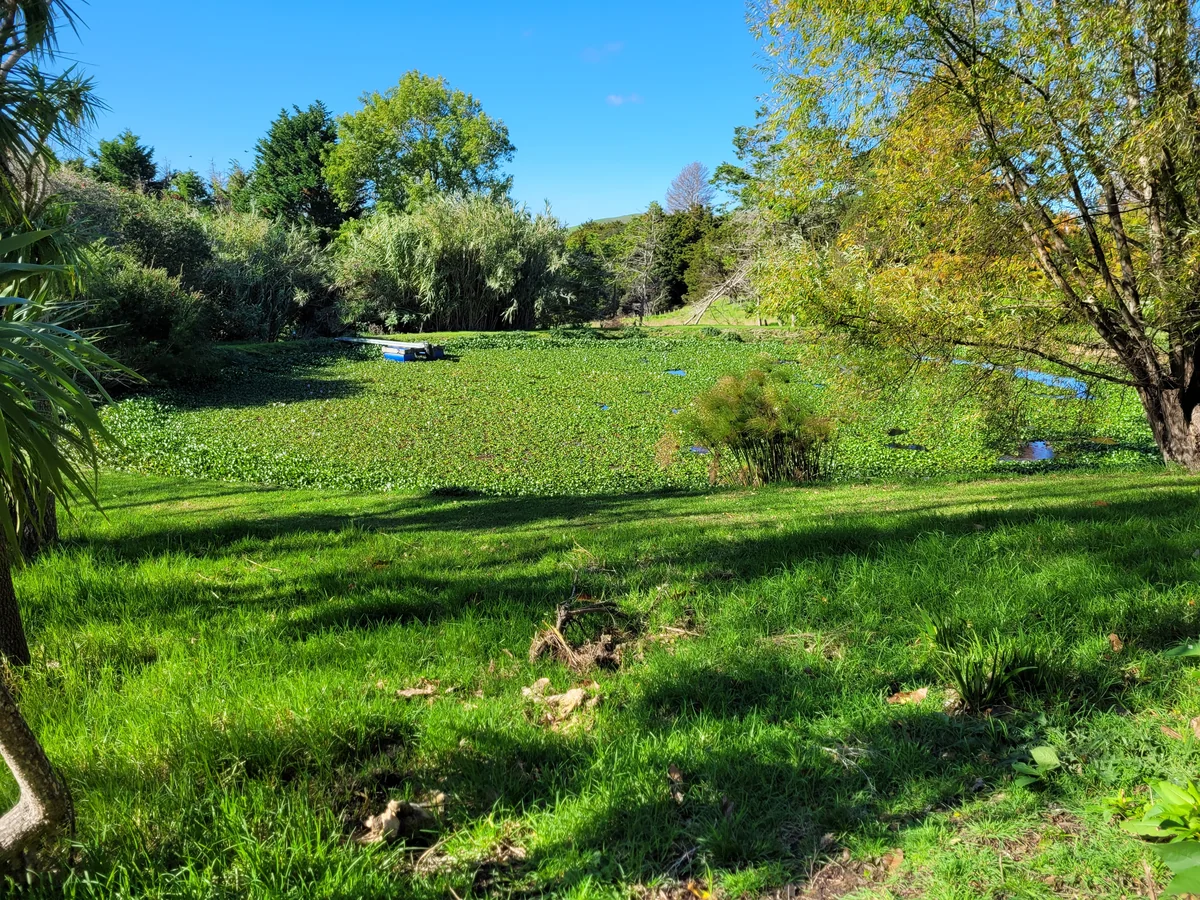
Water hyacinth and salvinia both have a significant impact on the environment around them. They grow as dense mats on the top of water bodies and will completely cover the water surface if not controlled. Native species living underwater are starved of oxygen and sunlight, and water quality degrades. Stormwater networks can end up blocked, causing flooding and severely impacting recreation, irrigation and water treatment operations. Despite their impact on the country’s freshwater environments, invasive weeds are sometimes kept in garden ponds by people unaware of the enormous risks they pose.
Water hyacinth and salvinia have been found as far south as Canterbury. They grow incredibly quickly in the warmer regions of New Zealand and can double their biomass in days.
As an example of growth potential, one Northland landowner was shocked after a fragment of water hyacinth that was accidentally moved from a small concrete pond to a 1000-square-metre pond grew to completely cover its surface. Once the landowner realised what the plant was, they reported the infestation and it was controlled, with the ecosystem in the pond now beginning to recover. These weeds are extremely expensive to remove once they spread and early detection is the only cost-effective management strategy.
To prevent water hyacinth and salvinia taking over our freshwater environment, Biosecurity New Zealand runs an overarching national eradication programme. This includes the removal of the species when they are found, and conducting long-term management and monitoring of the sites, since fragments of plants or their seeds may lie dormant in the environment for decades.
Two of the most damaging weeds
You can find out more about how to identify salvinia and water hyacinth at www.mpi.govt.nz/biosecurity. Here are a few key features to look for when keeping an eye out for salvinia and water hyacinth.
Salvinia
- Juvenile plants have small, pale-green leaves that lie flat on the water’s surface.
- Adult plants have rounded, 1–4-centimetre by 1–5-centimetre crowded and compacted leaves, folded along the midrib.
- Both juveniles and adults have rows of small, water-repellent hairs on the top of their leaves.
Water hyacinth
- Plants have shiny, round leaves, which are bright green.
- The leaf stems on young plants have a bulbous base.
- The mauve-blue flowers have a yellow spot. These will appear from midsummer to early autumn.
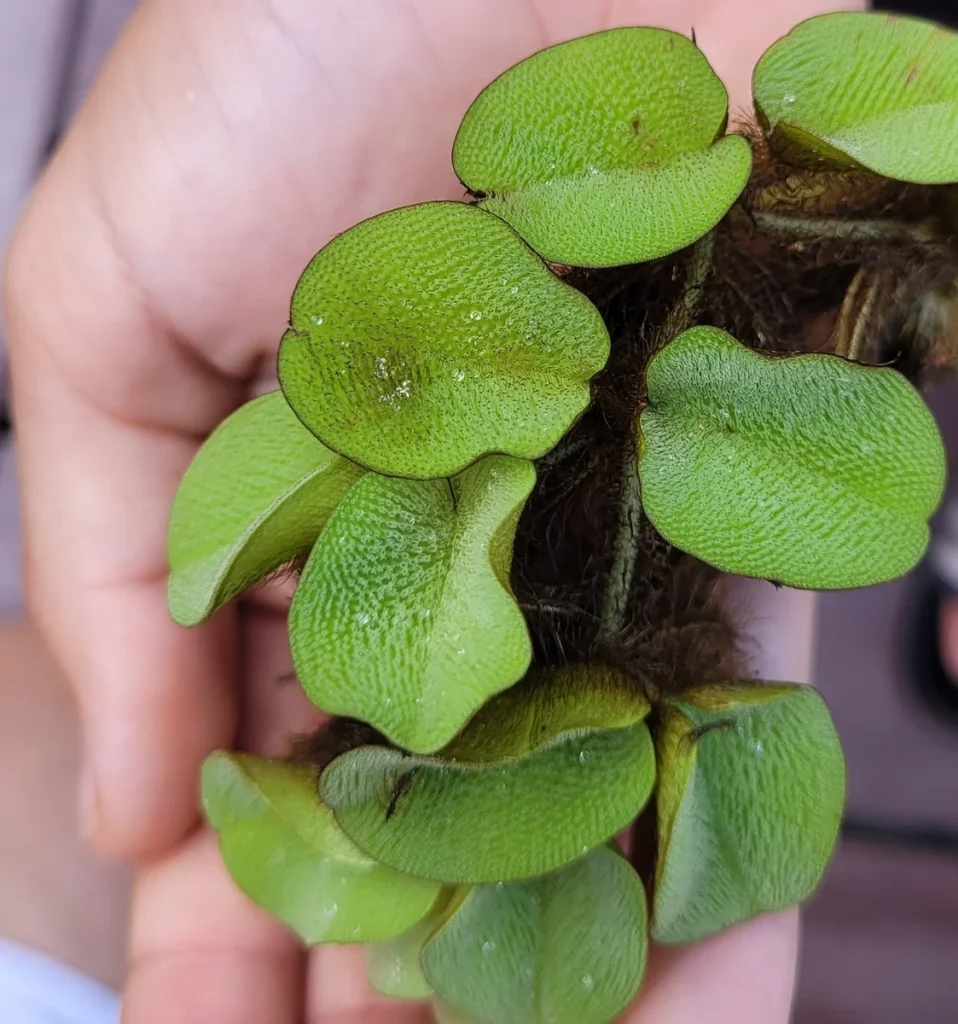
Salvinia leaves have small water‑repellent hairs
The best thing you can do to help keep these plants from taking over our freshwater ecosystems is to let Ministry for Primary Industries know if you have seen them via free-phone 0800 80 99 66 or online at report.mpi.govt.nz/pest.
Even if you aren’t sure, you should still report any sightings. There was recently a report that came from someone who noticed some unfamiliar plants growing in their pond and used Google Lens to find out what they might be. When the results came back as salvinia, they did the right thing and got in touch with Biosecurity New Zealand straight away. After a site visit, the identification was confirmed and the infestation could be treated.
All New Zealanders play a crucial role in protecting our freshwater environments and stopping the spread of pest species. Only through collective effort will we be successful in protecting our waterways from these invasive weeds. 
How you can help
- Do not grow or share invasive plants. Encourage others to do the same.
- Don’t release plants or aquarium contents into the wild.
- Report any sightings of invasive plants to Ministry for Primary Industries.
Contact Ministry for Primary Industries on free-phone 0800 80 99 66 or online at report.mpi.govt.nz/pest. 