
By Meg Taylor-Silva, National Corbicula Programme
Three years ago, an invasive freshwater clam (Corbicula fluminea) was discovered at Bob’s Landing in Lake Karāpiro, Waikato. Since then, regional councils, mana whenua, government agencies, research organisations and industry have been working together to understand how this pest behaves in Aotearoa New Zealand, and how we can stop its spread.
Understanding how quickly populations of the invasive Corbicula fluminea are growing and how juvenile invasive freshwater clams move through freshwater systems is key to long-term planning.
Since the initial detection at Lake Karāpiro in 2023, Earth Sciences New Zealand (ESNZ) has been leading population studies to build a clearer picture of how the invasive freshwater clam, and native species such as kākahi and pea clams, are distributed within Lakes Maraetai and Karāpiro.
Findings in 2025 showed that invasive freshwater clam populations can vary significantly between sites and depths, highlighting how much there is still to learn about where the pest is most likely to establish and spread. Results from the 2026 study, conducted in May this year, will provide further insight.
Monitoring outside known infestations is equally important. Each year, Biosecurity New Zealand coordinates a national surveillance programme with partners to monitor high-risk lakes, rivers and other water bodies.
In 2025/26, the programme pivoted to using plankton nets – a simple, low-tech method for the early detection of clams and other invasive freshwater molluscs. The nets target the larval stage, when clams can be as tiny as a grain of sand and move freely through the water. The surveillance programme aims to identify new incursions before populations become established and widespread.
Because the method captures actual organisms that can be confirmed through laboratory analysis, it provides a valuable tool for detecting pests at an early stage.
Across the country, approximately 65 high-risk waterbodies were surveyed using this approach, with no detections of invasive freshwater clams or invasive mussels such as zebra, quagga or golden mussels, which are not present in New Zealand.
Building the toolkit
Monitoring helps us understand where invasive clams are and how they are spreading, but with nationwide eradication not currently considered feasible, researchers are working to develop tools that could help manage the clams and reduce their impacts.
ESNZ is carrying out world-leading research, building on international knowledge and adapting it to New Zealand conditions. There is currently a focus on whether clams can be killed using benthic barriers, a method already being used to control aquatic weeds.
Researchers are essentially trying to work out the best way to smother the clams, using an ethylene propylene diene monomer rubber liner that could be laid over lake and riverbeds to reduce their oxygen supply and result in their death.
Benthic barriers are being explored as a control tool for early-stage incursions. If the clams haven’t been at a site for too long, there is a chance they could be smothered.
Alongside these barriers, scientists are exploring a wider toolkit for controlling the clam, including early-stage research into whether sound could be used to disrupt larval life stages.
The focus isn’t on a single silver bullet, but on building a suite of tools for new incursions, giving us a better chance of reducing impacts on infrastructure, the economy and ecosystems.
Turning the research into action
Slowing the spread ultimately comes down to people taking action. Anyone moving between waterways should stay vigilant, making sure they aren’t accidentally carrying clams or other invasive pests to a new location.
Those working in a freshwater environment can help by taking the time to plan how they move gear and equipment between water bodies. The same principles behind Check Clean Dry apply: check for what’s visible, clean for what isn’t visible, and dry to be sure. For absorbent gear and equipment, there is a range of scientifically backed treatment options available on the Biosecurity New Zealand website. Taking these steps can significantly reduce the risk of spreading invasive species.
Awareness is equally important. Understanding the characteristics of the clam, and how it differs from our native species, can help with early detection. In Taranaki, a 10-year-old recognised an invasive freshwater clam after seeing information at a community event and reported it, prompting action.
What’s next?
Three years on, while the Waikato River remains at the centre of efforts to understand and manage the invasive freshwater clam, a recent detection at Lake Rotomanu, Taranaki, reinforces the need for nationally coordinated surveillance and shared learning.
While the science is still evolving, the lessons learnt in the Waikato are helping shape how New Zealand responds to current and future freshwater biosecurity threats.
Clams don’t see borders, and neither can the effort to stop their spread.
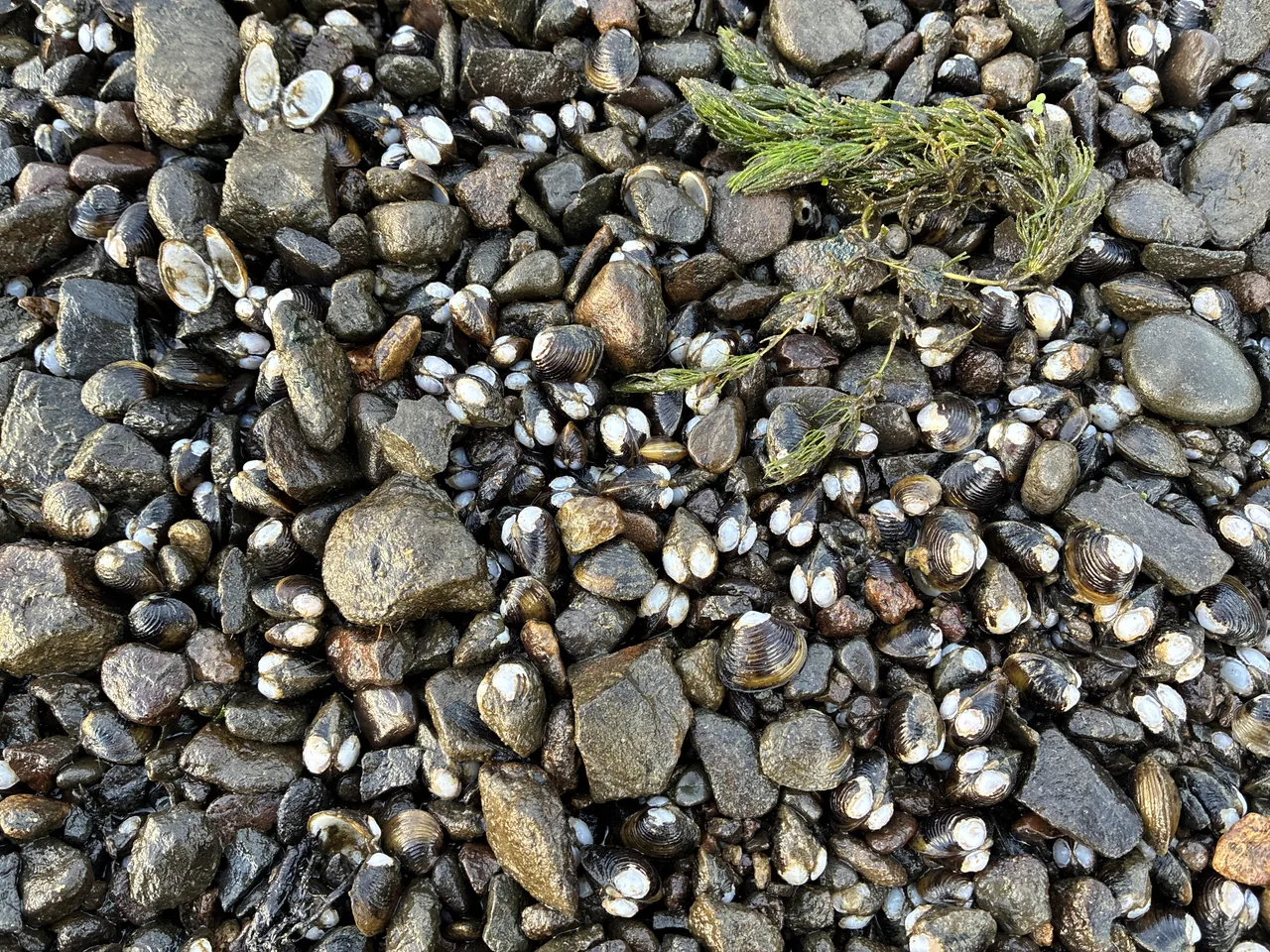
Spot the clams: invasive freshwater clams blend into the lake bed at Karāpiro
Department of Conservation (DOC) Ranger Sam Appleton was one of many DOC staff working across the country to support national surveillance efforts
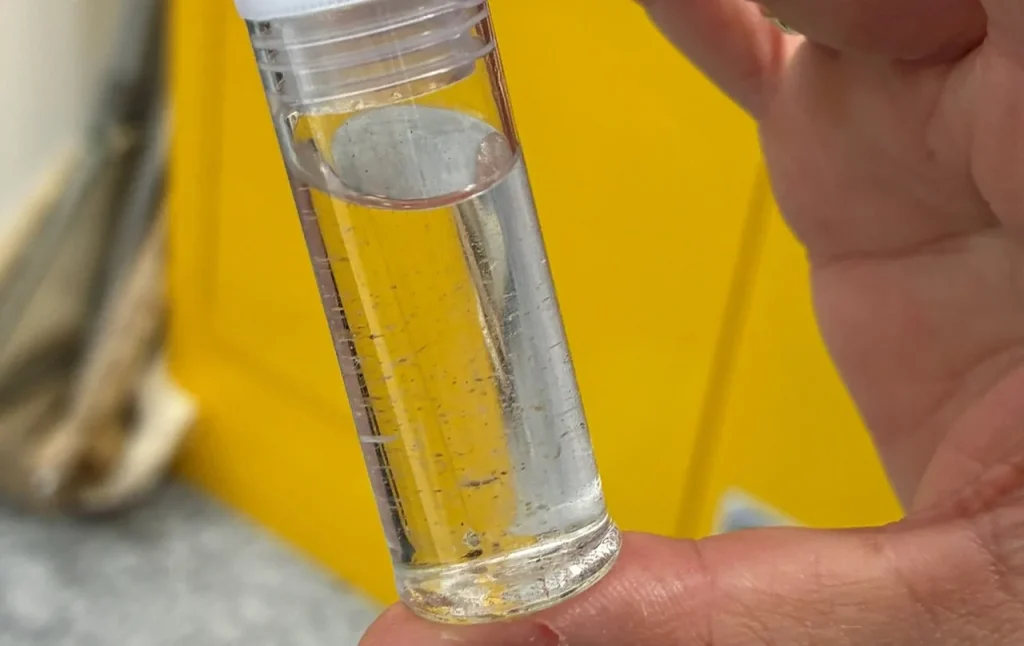
Alex Fear, Senior Communications Advisor at Earth Sciences New Zealand, has dubbed this sample the ‘vile vial’ containing approximately 900 baby clams smaller than a grain of sand
Earth Sciences New Zealand’s Dr Michele Melchior, Fern Kumeroa and Waikato Regional Council Biosecurity Officer Gordon Tieman count juvenile clams as part of the annual population studies (MBIE-funded Endeavour Programme NIW2475)
How to spot invasive freshwater clams
Invasive freshwater clams can be difficult to see. They are tiny as juveniles and, as adults, often sit partly buried in sediment, blending into their surrounds.
Look for adult shells that are usually gold, golden-brown or dark brown, with fine ridges or growth lines across the surface. There is often a white, eroded area at the tip of the shell, which is easier to spot.
On the other hand, kākahi, our native freshwater mussel, are oval-shaped and often significantly darker.
If you think you’ve found one, don’t move it. Take a clear photo, note the location, and report it to Biosecurity New Zealand via the exotic pest and disease hotline on 0800 80 99 66.