
By Janie Smith, Communications Advisor, Watercare Services Limited
It’s been decades in the making, and now Aotearoa New Zealand’s largest-ever wastewater project, Watercare’s Central Interceptor, is mere months away from completion and unlocking the next generation of water quality improvements for Auckland.
The completion of the Central Interceptor promises major improvements to water quality, and a dramatic reduction in wastewater overflows into the Waitematā Harbour and surrounding waterways.
‘It’s a game changer for the city,’ says Jamie Sinclair, Watercare Chief Executive. ‘It’s an amazing city-shaping project that will provide major environmental and growth benefits, as well as enabling more projects that directly reduce wastewater overflows and have a positive impact on the health of the Waitematā Harbour.’
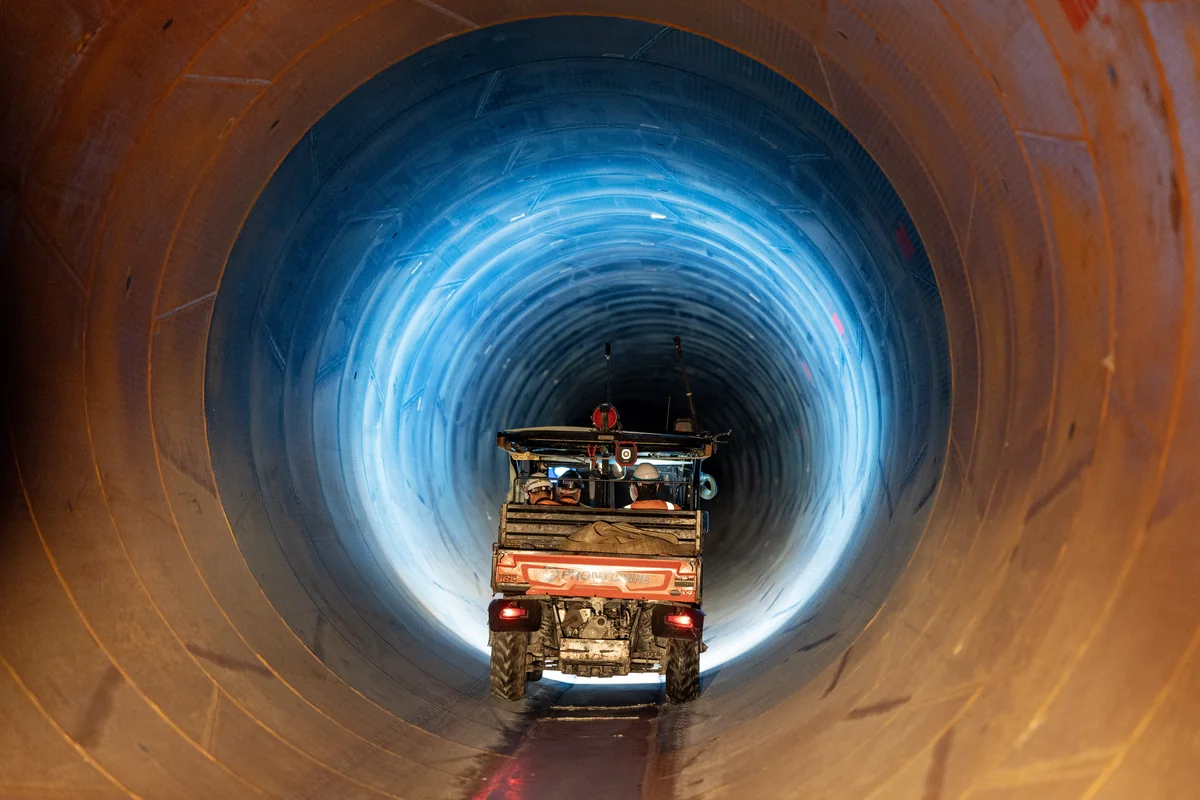
The 16.2-kilometre, 4.5-metre-diameter wastewater tunnel runs from Point Erin in Herne Bay to the Māngere Wastewater Treatment Plant at depths of between 15 and 110 metres below the surface, including a stretch underneath the Manukau Harbour.
It currently has two link sewers – one gathering wastewater and stormwater flows from Mount Roskill and Blockhouse Bay, the other catching flows from Mount Albert.
The Ghella Abergeldie joint venture was contracted to deliver the $1.66-billion supersized sewer and construction began in 2019, with the southern half of the tunnel going live in early 2025.
It has already had a significant environmental impact – as of March this year, it had prevented an estimated 450,000 cubic metres of wastewater and stormwater from spilling into the environment.
In late July, the northern half will go live, making the tunnel fully operational and enabling the next phase of environmental benefits.
Italian tunnelling specialist Ghella has moved from building the Central Interceptor to working on the Herne Bay Collector wastewater tunnel, which will connect to the Central Interceptor when it is completed in late 2028, and the two projects combined will reduce up to 80 per cent of wet weather overflows to the environment in the catchments they serve.
‘The environmental outcomes the Central Interceptor will deliver in terms of reducing overflows reflect what Aucklanders value – our beautiful marine environment and the ability to swim at our beaches,’ says Sinclair.
The road to completion hasn’t always been a smooth one – the project team has weathered storms, both literal and metaphorical, to build the tunnel for Auckland.
Major weather events, the COVID-19 pandemic and unprecedented inflation presented significant challenges, but the team rallied to deliver the project on time and close to the original budget, something Sinclair says is almost unheard of for mega projects.
‘The way the Central Interceptor has been planned and executed is a testament to the skills and dedication of those involved. We have so many great learnings from the project that we’re bringing into the wider business as we ramp up to deliver a record level of investment in Auckland’s water and wastewater system over the coming years.
‘The safety performance on the project has been exemplary. People are at the heart of the Central Interceptor story and the strong safety culture ensured they went home safe every day.’
Programme Director Morris Taylor says the 600-strong team has had a great culture throughout the delivery phase.
‘All the parties involved have been committed to delivering infrastructure that will improve the livability of the city. Our people have worked with contractors, consultants and the community to get the Central Interceptor to where it is now, on the brink of being fully operational. It’s been a mammoth effort for all involved.’
Taylor was a member of the project’s governing board for the construction phase before taking over the role of Programme Director from Shayne Cunis, who left Watercare in 2025.
‘Projects of this scale and complexity don’t happen quickly and although it’s been in delivery for seven years, its inception was more than 20 years ago,’ says Taylor. ‘It’s important to recognise the foresight and effort people have put into this project from the early days, across all phases of design, development, construction, procurement and delivery. It’s been a long journey.’
Although the Central Interceptor project is coming to an end, it’s just the start of many more projects Watercare has planned that will deliver improved water and wastewater services, enable growth, and improve environmental outcomes for Auckland.
‘I’m excited by the fact that the Central Interceptor facilitates other sewer connections like the Herne Bay Collector to continue to improve overflows in other catchments,’ says Taylor.
‘Watercare is investing around $13.8 billion over the next 10 years, with a strong focus on growth infrastructure and renewals, with the Central Interceptor as a key enabler for future projects.’
Image shows the Watercare team doing the final inspection of the northern half of the tunnel in March 2026, ahead of it going live in July. Images courtesy of Watercare.