
By Pitolau Lusia Sefo-Leau, CEO, Pacific Water and Wastewater Association
Across the Pacific region, water and wastewater utilities operate in some of the most challenging conditions in the world. Small populations, dispersed geography, limited financial resources, climate vulnerability and aging infrastructure all place pressure on service delivery. Yet, despite these constraints, Pacific utilities have developed practical, innovative, and collaborative approaches that offer valuable lessons for water professionals in Aotearoa New Zealand.
The Pacific Water & Wastewater Association (PWWA) works to connect utilities, practitioners, policymakers and development partners across the Pacific. Through conferences, benchmarking programmes, training initiatives and peer networks, PWWA has fostered a culture of shared learning that is increasingly relevant beyond the region.
As Aotearoa New Zealand’s water sector navigates reform, resilience planning and infrastructure renewal, the Pacific experience demonstrates how collaboration and adaptability can strengthen capability and improve outcomes.
A regional platform for shared learning
For many Pacific utilities, operating in isolation is not an option. Limited technical capacity and specialist expertise mean that collaboration is essential. Over the past two decades, PWWA has served as a regional platform where utilities exchange knowledge, compare performance and collectively address common challenges.
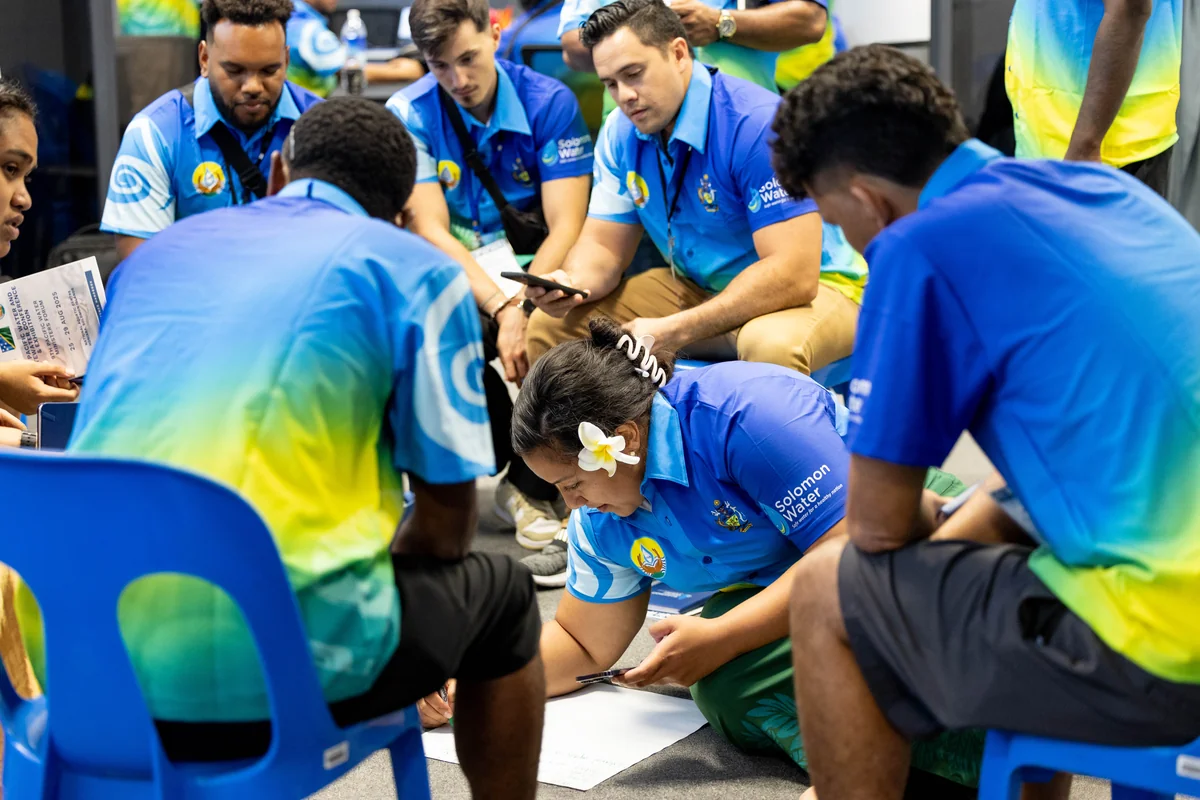
Regional Pacific water and wastewater conferences, technical workshops, and leadership forums bring together engineers, utility managers, regulators, and frontline staff from across Melanesia, Polynesia, and Micronesia. These forums create space for candid discussions about system failures, funding gaps, workforce shortages and governance challenges.
Importantly, these exchanges are practitioner-led. Utilities openly share what has workedand what has failed, and why. Discussions on issues such as leakage reduction, wastewater pond optimisation, customer engagement, and asset management often lead to follow-up collaboration, peer mentoring, and technical support between utilities.
For New Zealand professionals, this model reinforces the value of trusted peer networks that prioritise learning and continuous improvement over competition.
Benchmarking as a catalyst for improvement
One of PWWA’s most significant regional initiatives has been its utility benchmarking programme. Through regular data collection, utilities track indicators such as non-revenue water, service coverage, staffing ratios, energy use and financial sustainability.
While data quality and consistency remain ongoing challenges, the benchmarking process itself has been transformative. Utilities have shifted from anecdotal assessments to evidence-based planning, using data to prioritise investments and support funding proposals.
Crucially, benchmarking results are discussed through facilitated regional workshops rather than published in isolation. Utility leaders collectively analyse trends, share improvement strategies and identify opportunities for peer mentoring. In several benchmarking cycles, utilities with stronger performance in specific areas have provided practical guidance and informal mentorship to others.
For New Zealand, where performance reporting is becoming increasingly central to regulation and reform, the Pacific experience demonstrates how benchmarking can function as a collaborative learning mechanism rather than a purely compliance-driven tool.
Innovation under constraint
Innovation in the Pacific is often driven by necessity rather than access to advanced technology. With limited budgets and logistical challenges, utilities focus on solutions that are adaptable, affordable and maintainable.
Examples include optimisation of wastewater stabilisation ponds through improved operational practices, adaptation of rainwater harvesting systems to supplement supply, and incremental upgrading of aging infrastructure rather than full system replacement. In many cases, operational improvements and staff training have delivered significant gains without major capital expenditure.
This form of context-driven innovation is increasingly relevant for New Zealand utilities facing rising construction costs and long-term renewal backlogs. Pacific experience highlights that innovation is not always about new technology – it often starts with better processes, skills development and asset optimisation.
Lessons for New Zealand Water professionals
Several core lessons emerge from Pacific regional collaboration. These lessons are based on operational experience, structured programmes, and long-term partnerships facilitated through PWWA and its regional network.
Collaboration strengthens capability
In the Pacific, collaboration is fundamental to sustaining utility operations. Regional training workshops, conference exchanges, and technical assistance programmes enable utilities to pool resources and strengthen professional capability.
Engineers and managers who participate in PWWA-facilitated initiatives often continue to support peers informally, sharing advice on operational challenges long after formal events conclude. This model reduces duplication of effort and accelerates problem-solving – an approach that is highly relevant for New Zealand utilities facing skills shortages and increasing system complexity.
Data works best when combined with dialogue
PWWA’s benchmarking programme demonstrates that performance data delivers greatest value when paired with professional dialogue. Results are discussed collectively in workshops where utilities interpret trends together, explore underlying causes and identify improvement strategies.
This approach builds trust, encourages transparency and supports continuous improvement. For New Zealand utilities operating in a data-rich regulatory environment, the Pacific experience reinforces the importance of pairing quantitative reporting with shared learning and peer engagement.
Innovation is contextual
Pacific utilities regularly innovate by adapting existing systems rather than replacing them. Incremental improvements, preventive maintenance regimes and locally delivered operator training have often produced meaningful performance gains.
These examples show that innovation does not always require significant capital investment. For New Zealand, where affordability and sustainability are growing concerns, Pacific approaches offer valuable insight into making the most of existing assets.
Community relationships matter
Community engagement is embedded in Pacific water management. Utilities work closely with village councils, traditional leaders, and local organisations to promote water conservation, sanitation awareness, and system sustainability.
Community-based water management initiatives have strengthened local ownership and improved long-term outcomes.
Resilience is collective
Pacific utilities operate on the frontline of climate impacts, including cyclones, droughts, flooding and rising sea levels. Regional collaboration has become a key resilience strategy, supported through disaster preparedness workshops, emergency response planning and mutual support arrangements.
Following extreme events, utilities often share technical expertise, equipment and recovery lessons through regional networks. For New Zealand, where climate-related disruptions are becoming more frequent, this collective approach highlights the value of formalised collaboration and shared preparedness.
A shared regional future
The Pacific and New Zealand share interconnected environmental systems, professional networks, and long-term water security challenges. As pressures intensify across the region, opportunities for deeper collaboration will continue to grow.
Through its regional initiatives, PWWA demonstrates how structured cooperation can turn constraints into opportunities. By fostering trust, building capacity, and promoting practical innovation, Pacific utilities are contributing valuable insights to the wider water sector.
For New Zealand water professionals, engaging with Pacific experience offers more than regional solidarity; it provides practical lessons in resilience, efficiency, and community-centred service delivery – lessons that are increasingly relevant in a changing climate and reforming sector. 