
How environmental DNA is changing the way we monitor and protect waterways.
‘Beautiful to behold,’ is how science assurance and investment adviser Michael Bates describes the information being gleaned from the latest technique in environmental monitoring and management. ‘And we are only just scratching at the surface of the full potential,’ he says.
Bates is part of the Science Assurance and Investment Team at the Ministry for the Environment (MfE). He and ecologist Andy Hicks from MfE’s Natural Resources Team are helping to develop a national dataset of environmental DNA (eDNA).
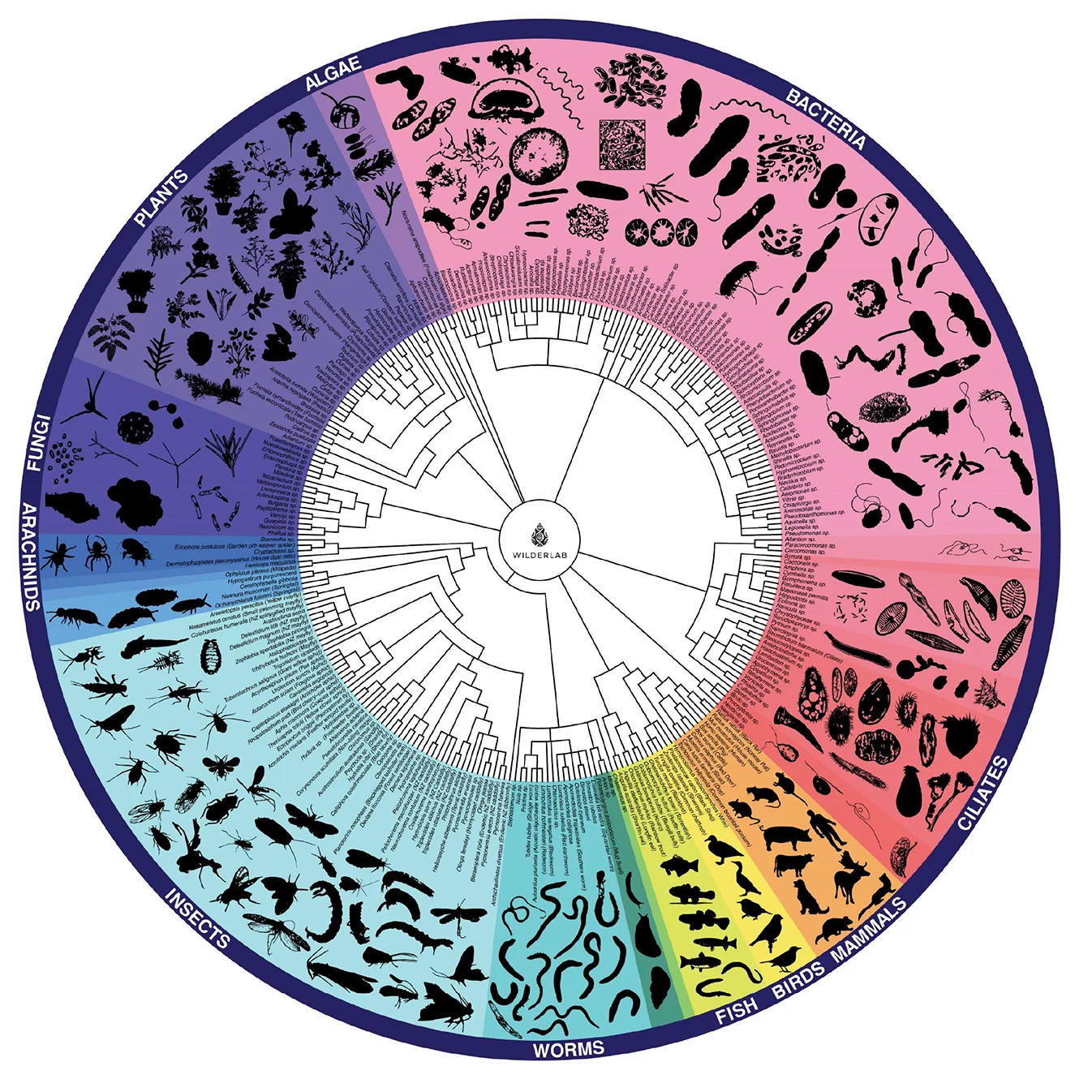
eDNA is a term that describes the tiny traces of genetic material that living things leave behind as they pass through water, soil or air. Capturing this naturally shed DNA allows us to read the genetic codes (or ‘barcodes’) of animals that live in a given area in a non-invasive way. ‘It’s a relatively new technology. It’s only really been used in earnest here since around 2018,’ Bates says.
Bates says Aotearoa New Zealand’s freshwater environment supports all aspects of our lives, but is in a degraded state in many areas. eDNA can help us better understand what’s going on by providing insights into ecosystem health and biodiversity, which would be prohibitively expensive using conventional methods.
‘eDNA is really cost-efficient. The same sample can provide information on fish, bugs, plants, rats, deer – the list goes on. It can assess whether the system is dominated by native or exotic species, or by species that are pollution‑tolerant or highly sensitive,’ he says.
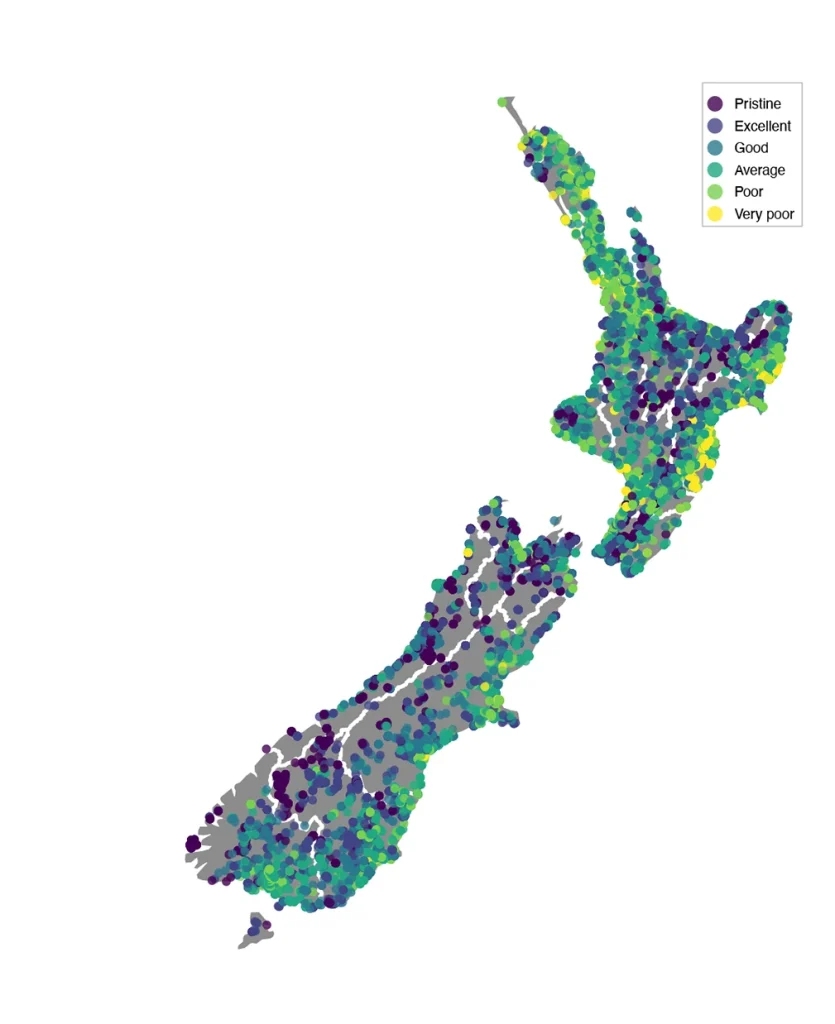
Bates and Hicks are involved in a number of nationwide collaborations between MfE, the Environmental Protection Authority (EPA), regional councils and the Department of Conservation (DoC), with the support of hapū and community groups. MfE is focused on developing eDNA techniques for management and environmental reporting, which regional councils have welcomed. Recent funding from MfE allowed for more than 800 sites across New Zealand to be sampled.
Hicks says the results are rolling in, and eDNA is really changing how we monitor and protect our waterways. ‘We now have one of the best country-wide eDNA datasets anywhere in the world. MfE, DoC and the EPA also worked with affected councils and communities to explore the impacts of Cyclone Gabrielle on the biota, or biodiversity, of affected rivers,’ he says.
eDNA data is already being used to track tuna (eels), kanakana (lamprey), and kakahi (mussels) in waterways, and monitor restoration efforts. eDNA technology has also detected a previously unknown population of critically threatened Clutha flathead galaxias in Central Otago’s Ōrau/Cardrona River, and detected two previously unknown incursions of noxious weeds in Te Matau-a-Māui Hawke’s Bay: Senegal tea and alligator weed.
‘Using eDNA meant a biosecurity response could begin early enough to try and nip in the bud what would have otherwise been an unknown (and growing) problem,’ Hicks says.
For the technique to be effective, any eDNA picked up in the sample needs to be matched back to a known species. MfE has contributed more than $440,000 and worked with research organisations and other agencies to develop and update DNA reference libraries using specimens collected across the country for taxonomic identification and genetic sequencing. The reference library has been updated to include, among other things, threatened marine fish, rare freshwater insects and cryptic (hidden) animals that live in groundwater.
Hicks says it’s important that the library accommodates Indigenous sovereignty, acknowledges Treaty of Waitangi obligations, and has co-led governance arrangements in place. ‘We also want to incorporate Māori perspectives around DNA and eDNA, which can be viewed as a physical representation of whakapapa.’
For Hicks and Bates, the future of eDNA looks bright. One of the things they are particularly interested in is a new way to measure water quality, using a metric called taxon‑independent community index (TICI), which is a world‑leading initiative led by project partner Wilderlab. TICI looks at thousands of organisms that are key indicators of river health and bundles them into a simple score. This approach, which is now a published and formally accredited technique, is providing a relatively inexpensive way to assess water quality across a wide area.
‘We are now working with the National Institute of Water and Atmospheric Research and regional councils to explore whether eDNA indicators could be used for river monitoring alongside conventional methods specified in the National Policy Statement for Freshwater Management,’ Hicks says.
These same datasets will, in turn, unlock more information about ecosystem health and biodiversity. ‘This is when we will start to realise the full potential of eDNA, supporting government, councils, tangata whenua and communities to have a more holistic understanding of the health of our waterways,’ Hicks says.
The eDNA data is available to explore on the Wilderlab website.
For further information, please contact media@mfe.govt.nz.