
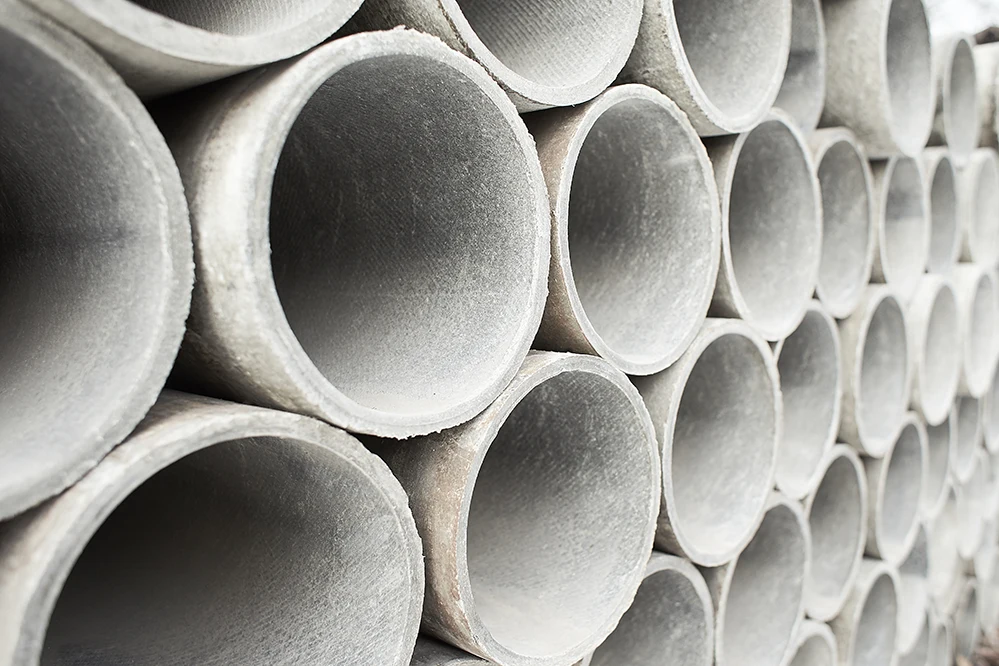
Aotearoa New Zealand’s water sector has assets valued at $50 billion, employs 3200 staff and delivers water services to 5.1 million customers1; however, our water pipeline asset owners are facing a significant asset aging crisis of a magnitude that cannot be easily resolved with existing income. A sonar wave technology can assist by allowing more efficient pipe replacement strategies.
In the water sector, there is a need for data-driven strategies and technologies that are tailored to New Zealand conditions, leading to more efficient pipe replacement strategies based on on-site measurement of pipe strength and remaining life. A research team at the University of Canterbury (UC) has developed a cutting-edge sonar technology over the past two decades that can assess the condition of our hidden pipeline network in seconds without any disruptions to the water supply or costly excavations.
The Office of the Auditor-General showed that all councils are investing less than the depreciation cost, and the accumulated gap grew to $7 billion by 20222 – driving an increasing risk of failures in critical assets. This shortfall is in part caused by a lack of accurate pipe wall condition and water usage data, which prevents councils from forming targeted renewal programs.
One of the guiding principles of the New Zealand Infrastructure Strategy is to enhance infrastructure efficiency3; yet where renewals are conducted, councils often replace pipes that still have a remaining service life, or neglect to renew pipes that are most in need of replacement due to inaccurate condition information. Walsby4 estimates accurate asset renewal can save 15 per cent of capital expenditure, equating to an annual saving of $240 million across the three waters sector.
New Zealand’s aging infrastructure is a topical issue, and the national performance review of the water sector shows average losses are currently at 20 per cent of our potable supply.1 Since 2017, Wellington has suffered a series of pipe bursts, leading to a water loss of one million litres per day, water supply disruption and large sinkholes under the city. Asbestos fibres from decaying asbestos cement pipes were found in drinking water in Temuka, South Canterbury, triggering public outcry and the delivery of bottled water to residents.5 An assessment technology that can provide the physical condition information of our water pipeline system will enable operators to make rapid decisions to minimise the risk to public health and water loss.
Pipeline condition assessment not only aims to detect leaks and broken pipes to reduce water loss, but should also focus on identifying deteriorated pipe sections prior to their failure. Current commercial condition assessment usually requires direct physical inspections via excavations, which are costly to carry out, disruptive to the water supply and have results that can only be determined through extensive laboratory testing of the samples. In addition, the information obtained yields the condition of a point on the pipeline, and crude assumptions have to be made regarding the representation of that sample result for the entire pipe system, which can span thousands of kilometres in length.
One would argue that such methods are not designed to deal with the scale of the New Zealand water asset crisis, and more than 90 per cent of New Zealand’s buried water pipeline networks have never been inspected.1 Therefore, revolutionary water technologies are urgently needed to provide pipeline condition information for large water supply networks.
Based at UC for the past two decades, mine and Professor Pedro Lee’s team has been dedicated to developing innovative technologies that can provide efficient, in situ and cost-effective pipeline condition assessments without any excavations or disruptions to our water supply. Our team has applied this technology across multiple countries, and is the recipient of the two Royal Society Marsden grants, as well as the leading international award on hydraulic engineering from the American Society of Civil Engineers. Among its past clients is the world’s largest private water utility company, as well as local councils.
The team’s technologies rely on measuring the speed of soundwaves travelling along water supply pipelines, and using this wave speed to infer the pipeline’s physical condition. The travelling speed of soundwaves is determined by pipe size, and pipe wall material and thickness. Thinner pipe walls, weaker pipe materials and larger pipe diameter during the deterioration process will all lead to a decrease in wave speed.
By comparing the measured wave speed against expectations (predicted from documented pipe materials and sizes), the current physical condition of the tested water pipeline can be reported through a traffic light system – where red, yellow and green lights refers to severe, medium, and mild pipe deterioration, indicated by different levels of wave speed discrepancy.
In the first generation of this technology, the wave speed measurement is achieved by installing two sensors at fire hydrants, sending soundwaves from one fire hydrant into the water pipeline, and measuring the time-of-flight and wave form of the wave travelling between the two sensors. This pressure wave can propagate more than 500 metres along the pipe, and extracted waveform information can be translated into physical conditions across the assessed pipe section, with the result represented as an average strength along the entire length, or a detailed assessment down to a few metres in resolution if required. Compared with existing commercial approaches, this technology is non‑intrusive and covers a much wider range, and thus is more efficient and appropriate for application in large-scale water pipeline networks.
This technology has been successfully applied in many domestic and international cities, including Christchurch, Auckland, Hong Kong, Shenzhen and Shanghai. In one of its recent applications in Oxford, Waimakariri District, the condition of 2.2 kilometres of buried asbestos cement water pipes was assessed within two days. Two pipe sections in a severe condition were identified, and their deterioration status was confirmed by independent CT scans of excavated samples.6 In addition, the technology also identified two undocumented short PVC pipe sections among the assessed networks. The research team is also working with the UC facilities management team to assess the condition of the water supply network across the campus, which is the initial stage of the 10-year UC water infrastructure rehabilitation plan.
The UC team is currently developing the second generation of this innovative technology, which was funded by the Marsden grant in 2023. The new generation aims to measure the wave speed by passively listening to the existing ambient noise signals within the water pipeline networks. The passive feature allows the incorporation of modern sensor network techniques, so that this technology can transform our water supply network system into a smart network by measuring its condition and status in real time.
References
1 Water New Zealand (2022), ‘National Performance Review’, 2021–2022
2 Matthews, M (2017), ‘Local government: Results of the 2015/16 audits’, Office of the Controller and Auditor General
3 NZ Infrastructure Commission (2021), ‘Draft New Zealand Infrastructure Strategy’
4 Walsby C. (2013), ‘Water 20/20 –Bringing Smart Water Networks into Focus’, 8th South Pacific Stormwater Conference Report. Issus 181
5 RNZ (2017), ‘Asbestos found in water supply of south Canterbury town’, Radio NZ, 7 December 2017, www.rnz.co.nz
6 Alexander, J., Li, Z., Lee, P., Roxburgh, C., & Davidson, M. (2023), ‘Laboratory and field experiment validations on the use of hydraulic transients for estimating buried water pipeline deterioration’, Structural Health Monitoring, 22(2), 814–831.