
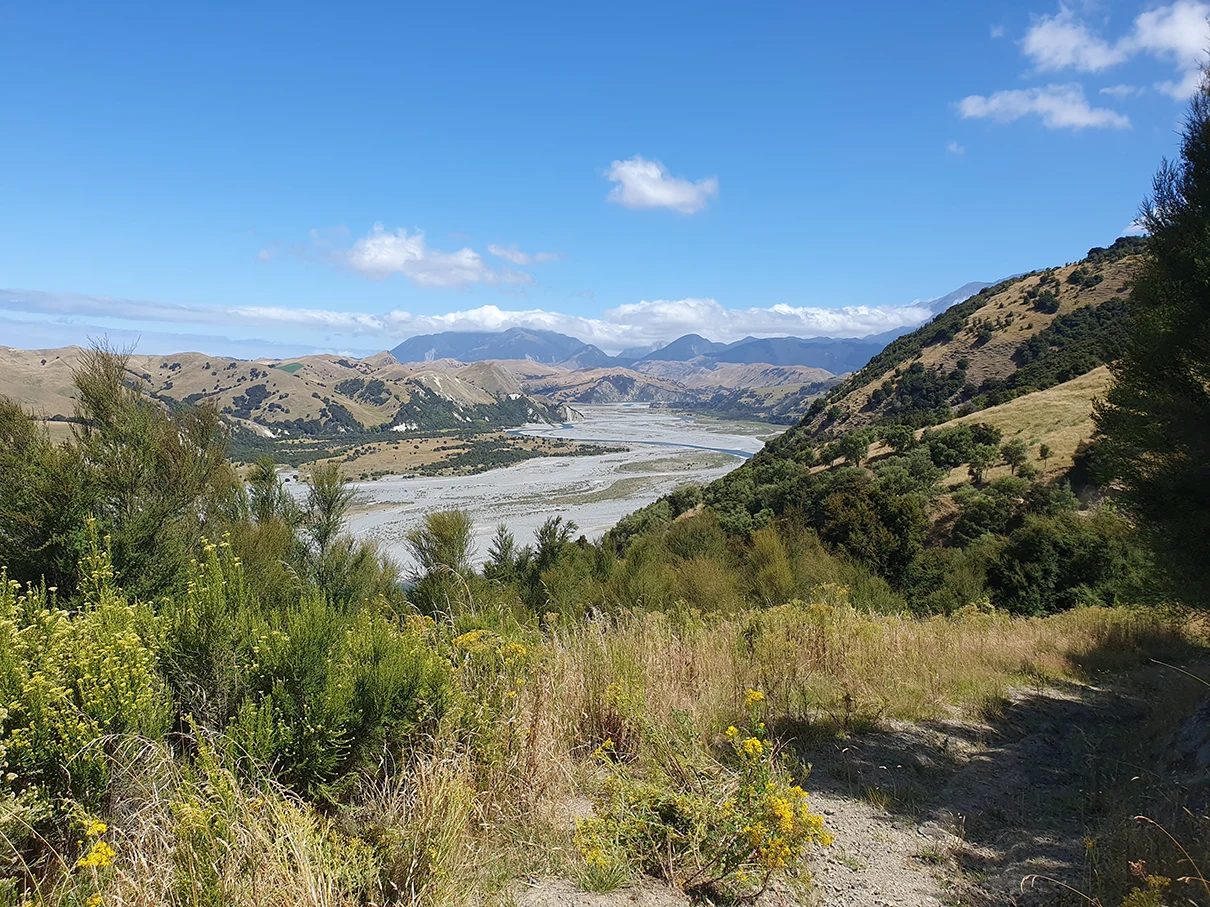
The Kaikōura Water Zone Committee has been focused on enhancing the Canterbury area’s water catchment biodiversity for 10 years.
The Waiau Toa/Clarence River catchment is one of Canterbury’s braided river gems. It is home to more than 125 species of flora and fauna that are classed as ‘threatened’ or ‘at risk’.
The Kaikōura Water Zone Committee is part of a decade-long partnership focused on enhancing the area’s biodiversity at a catchment level. Since 2014, various agencies and landowners have been working together to improve the health of the river and wider catchment area through an integrated catchment approach.
The water zone committee has helped fund on-the-ground pest and weed control work. Committee Facilitator Jodie Hoggard says members are thrilled to be supporting this mahi.
‘It’s an excellent example of organisations and individuals teaming up for a greater good.’
Water zone committees – a connection point
The Kaikōura Water Zone Committee is one of nine water zone committees across Waitaha. Each committee includes a Canterbury Regional Council (Environment Canterbury) appointee, a local city or district councillor, rūnanga representatives, and between four and seven community members.
The committees support water-related community projects by making funding recommendations to Environment Canterbury, as well as assisting with policy and planning work. They’re seen as a ‘connection point’ between the regional council and district/city councils – and provide leadership and advocacy for water quality (and environmental) improvements and outcomes.
In the most recent financial year, the Kaikōura committee supported five local projects by way of funding, including the Waiau Toa/Clarence River catchment work.
The other projects were:
- Hāpuku Catchment Collective – Year 3: reducing weed cover in the catchment area, supporting predator control and riparian enhancement works.
- Waiau Toa hapua protection: controlling predator threats and working with the community in the hope of improving fledging success among black-billed gulls and other endemic shorebirds at the Waiau Toa/Clarence hapua/river mouth.
- Seaweek: helping with a series of community events focused on protecting our oceans, including a collaborative stormwater awareness campaign with Kaikōura District Council, an art competition, movies, a quiz night, a stormwater treasure hunt for children, and a beach clean-up at Waikōau/Lyell Creek.
- Tirohanga Wetland – Stage 2: supporting on-the-ground actions, including planting and weed control at Canterbury’s most northern coastal wetland at Tirohanga.
Waiau toa/Clarence River collaboration – a case study
Since 2014, a range of projects have been carried out as part of the Waiau Toa/Clarence pest and weed management strategies. The water zone committee is one of several stakeholders involved, the others being Environment Canterbury; Boffa Miskell; Toitū Te Whenua Land Information New Zealand; Te Rūnanga o Kaikōura; Department of Conservation; Marlborough District Council; and landowners, station managers, and their workers. Together, they’ve contributed more than $3.5 million to catchment protection and enhancement measures.
A working relationship with Clarence River Rafting has been paramount to the success of the program, including around better management of weeds and pests. Rafting guides provide observations on weed infestations and access to hard-to-reach locations for targeted control of weeds such as gorse, broom, crack willow, and buddleia.
Broom and gorse leach nitrogen into waterways, and willows suck up large volumes of water – so removing them helps maintain healthy flows. These stubborn, invasive plants can also jeopardise the local ecosystem by displacing native vegetation, and increasing cover for mammal predators such as cats and stoats. This, in turn, reduces the amount of native nesting habitats for braided river birds.
In addition, the rafting team helps control southern black‑backed gull/karoro nests along the river. Karoro are increasing in number, and prey on precious bird species such as banded doterels/pohowera, black-fronted terns/tarapirohe, and black-billed gulls/tarāpuka.
The team has set up traplines for other pests such as rats, hedgehogs, weasels, ferrets, stoats and feral cats at key locations in the catchment.
Hoggard says the work is bringing a variety of benefits to the catchment.
‘The reduced agricultural weeds are benefiting farms, and then there’s the recreational, landscape and eventual water quality benefits.
‘It also helps connect folk together around a common passion – the sheer beauty of the Waiau Toa/Clarence River catchment, recognised as one of Aotearoa New Zealand’s last remaining wild and iconic braided rivers. It’s win-win all around.’
Unique water challenges
As with any area, Kaikōura has its own set of water-related challenges. Hoggard says the Kaikōura earthquake in 2016 had a lasting impact.
‘Some locals would say that the hydrology of the area has changed,’ she says. ‘The Kaikōura flats can generally be said to be wetter post-quake. Springs have popped up in new areas, creating some challenges. The quake also has created a huge gravel build up in the headwaters of our creeks and rivers, therefore increasing the flood risk.’
When it comes to water quality, Hoggard notes that huge improvements have been made over time and, thankfully, older legacy practices involving unconsented discharges are no longer the way.
‘However, there’s still more to do – particularly with education around stormwater. Many people still don’t realise that stormwater grates usually lead to the ocean.’
The water zone committee will continue identifying funding opportunities that align with its Action Plan 2021–24. The plan outlines how members will work with the community to deliver on its aspirations for fresh water, as laid out in the Canterbury Water Management Strategy.